Friday, June 14, 2013

3 Food Gifts for your girlfriend that would never disappoint her

What girls like is strikingly different from what guys like. Food is no exception. Women usually like sweeter, more visually appealing food. Let's get to the point and see what food your gal might like to get!

1. Chocolates


Who doesn't like chocolates? Women LOVE chocolates unless they are allergic to them. Chocolates are sweet, just like love. Love and chocolates are like perfect combinations. Get her a box of Godiva or high-end chocolates and she will love them! (One Caveat: Not a wise choice if your girlfriend is losing weight.)

2. Cupcakes


Cupcakes are like competitors to chocolates. They taste even sweeter and look prettier. To women, cupcakes are like handbags in the fashion industry. They are pretty to look at, delicious when eaten, and something they can post on Facebook. Get her a box of cupcakes (delicious ones!) and she will be delighted. Make sure you get them from famous cupcake shops though. When cupcakes don't taste good, they will have to be thrown away. :( Get the prettiest ones.
Tip: Most women like Red Velvet or chocolate cupcakes!!

3. Wine and Cheese


What can be more romantic than wine and cheese? It's something that you can get for her and enjoy with her. If she's not familiar with wine, get her a wine or champagne that is sweet, fruit flavored, and not too bitter. Buy some cheese that match perfectly with the wine you bought. Flowers can also be a good match with wine.

Any other food gifts you want to recommend? Please leave a comment!:)


Bio: Emily works at Funfundate, a social matching game dedicated to connecting people with like-minded singles nearby in a stress-free, fun way. She likes to cook, travel, and read books in her spare time.

Monday, June 10, 2013

Launching a new product: 4 Things to Analyze (Case study of a dating industry included)


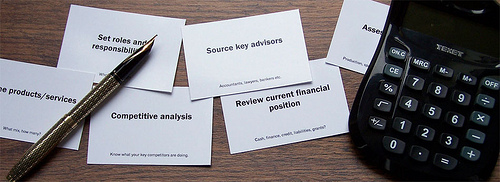
When you’re thinking about launching a new product, you need to think about 4 things first to make sure that you have a high chance of success.
They are: Industry, Competition, Customer, and Company (including Product).
Image
1. Industry
-Industry lifecycle (is it emerging? mature? declining?)
For instance, in the online dating industry my company is in, it is a mature market and there are lots of small and big players.
-Is the industry growing?
-Is it heavily regulated? Any legal issues?
-What is the barrier to entry and exit?
(The higher the fixed cost, the higher the barrier to entry.)
-What drives this industry? (Is it brands, technology, etc)
For instance, the online dating industry is driven by two things: innovative technology + marketing.
-How profitable is the industry?
2. Competition
-Who are the major players and what market share do they have? Is it monopoly? oligopoly? etc.
For example, in online dating industry, there are about 3 major players which have been around for a decade or so, and they hold 60% market share total.
-Product analysis: any differentiating factors?
-Distribution channels, suppliers, target customers
-pricing strategies
-any substitutions?
3. Customer
-Who’s our target customer? (Segment by channel, by product, region, type)
-Figure out any trends and needs
-Willingness to pay, price elasticity and sensitivity
-Which Distribution channels do they like?
For example, do they want to buy online? on mobile? in the supermarket? in the store?
4. Company/Product
-What are your product’s differentiating factors?
For instance, my product, Funfundate, sends you 2 daily matches and lets you pick which one is hotter, thus gamifying the product and positioning it as “a social matching game” instead of an “online dating service.”
-is it a commodity product or premium? (which affects pricing)
-Pricing- How much would we charge for? What’s our revenue model like?
-Cost of manufacturing/building and distributing the product
-Then, Predict revenue/year
-Then, figure out if you can break-even?
For instance, it costs you $1 million (fixed sum) to build a product, and $500K of variable cost per year. But if you can only make $300K per year given the number of customers you predict and price you set, you cannot break even ($300K<$500K), and this doesn’t even take into account the initial cost of $1 mil.
-Can you finance the product? how?
<Summary>
Do you think your product will be successful in your market? How big is the market size? How competitive is the industry? Can you differentiate? Can you fulfill the needs of your target customers? Is your product expensive or cheap? How can you finance your product?
If you analyze the industry, competition, customer, and company (and its product), you can at least avoid some pitfalls. This analysis alone doesn’t gauge success or failure, but you can get a deep insight into your market and know what you are signing up for. Think strategically and objectively. Don’t fall into a trap of loving your “idea” too much because it can mislead you in determining whether your product will be successful!

Bio: Emily is the marketing director at Funfundate, a social matching game dedicated to connecting people with like-minded singles nearby in a stress-free, fun way. She likes to cook, travel, and read books.

References: Marc P. Cosentino’s Case in Point, Michael Porter’s Five Forces

Thursday, June 6, 2013

[Asian Food] Fried Rice with Kimchi (Recipe Included)


Have you heard of Korean Bibimbop, Korean Bulgogi Taco, or Kimchi-Bulgogi Hot Dog? If you live in New York, you might have at least heard of them. (I noticed almost a lot of New Yorkers are foodies!) There is a rise in popularity of Korean food especially among New Yorkers. Even some of the most popular fine dining restaurant chefs are intrigued by it. They visit South Korea to taste the real Korean food and get inspired. It used to be only Korean Americans and Korean international students in NYC who enjoyed a yumminess of Korean food at restaurants in K-Town. This is no longer the case. We see more and more fine dining restaurant chefs who started to experiment with it and add some Korean flavor to their dish.
One of the most common dishes in Korea is Kimchi. It's not even a dish itself. It's more like a side dish you can have with your main dish. Kimchi goes well not just with Korean dishes but also with American, Japanese, Chinese, French... you name it. You can eat Kimchi separately as a side dish or use Kimchi as one of the ingredients for your dish. I personally like both. Yummm!
My favorite Korean dish which has Kimchi in it as an ingredient is Kimchi Fried Rice.
Image
I'm a huge fan of fried rice. I love Japanese,Chinese, Thai, and even Vietnamese versions of  fried rice. Fried rice is the best.Asian.food ever. With Kimchi in it, it gets even better.
When you eat a typical Asian fried rice (as a main dish), you often need some side dishes or other main dishes to eat with it because fried rice itself is not salty, sweet, or spicy. You need something to spice it up a little bit. Kimchi is the best ingredient for this!
Before you start cooking fried rice, start with Kimchi. Cut Kimchi into small pieces and put them all into your pan. (Heat the pan, add the oil, as usual.) You stir fry them until they start changing their color (between red and brown). Then, you add all other ingredients into the pan and make fried rice as you did before. You can also add some Kimchi juice (red liquid included in your Kimchi pack) to your fried rice as you are cooking. Adding Kimchi to your fried rice will make the dish look RED and taste spicy! It tastes heavenly.
Caveat: If you put too much Kimchi in there, it will get too spicy.
My other favorite Kimchi dishes are Kimchi Jigae and Kimchi Bulgogi, and I will share my recipes in later posts. What do you think about Korean food? Do you like them? Share your favorite K-dish by leaving a comment below!:)
Bio: Emily is the marketing director at Funfundate, a social matching game dedicated to connecting people with like-minded singles nearby in a stress-free, fun way. She likes to cook, travel, and read books.

Wednesday, June 5, 2013

Lesson from OMGPOP shut-down: Don't get acquired by Zynga?


I just heard the unfortunate news that OMGPOP no longer exists. Zynga shut it down officially, and strangely it seems like some OMGPOP employees found out about their layoff via Facebook. What happened between these 2 companies?
I used to be a huge fan of OMGPOP's Draw Something. It was a fun, social game I used to enjoy with my friends. Then one day, I read about Zynga's acquisition of OMGPOP, and this quickly made me lose interest in the game and switch to another similar game. It's not that I don't like Zynga but that I thought OMGPOP had so much potential but they lost it by getting acquired by a big, established company.
Zynga has had a bad reputation for a while. A company with a bad reputation never survives long. When talented, creative people start leaving, or when a company lays off talented people, that's often a bad sign.
d
What Zynga is doing wrong is as follows:
1. Zynga doesn't have a respect for the company they acquired.
They acquired a creative, popular game company and they shut it down because they think it's a "mistake"? Rather than trying to resolve conflicts and use OMGPOP's talents to develop an innovative game, Zynga decides that it will just shut the whole thing down and lay off all of its employees. From now on, no start-ups are going to be "excited" about getting acquired by Zynga.
2. Zynga is known to copy games from others. A big no-no.
Talented people would no longer want to work for Zynga. Would you want to work for an established, popular company that copies games from others?
3. Zynga made an acquisition in a hurry.
Zynga obviously wanted to acquire OMGPOP because its game went viral and very popular internationally. Post-acquisition culture clash is actually quite common, but Zynga should have been more careful about the acquisition. Both companies and their management teams need to trust each other and share their visions.  It seems that neither were ready for M&A.
If Zynga wants to fix its damaged reputation and become a beloved, innovative company again, instead of acquiring start-ups hastily, hire some killer talents and let them freely create an innovative game that is not copied nor similar to other games. The management should be nice to all of your employees, and benchmark other company's creative culture like Facebook's if necessary.

Friday, May 31, 2013

3 Budget-Friendly Weekend Date Ideas


Thank god it’s weekend again! What are your plans for this weekend? Are you planning to go on a date and wanna do something fun?
Here are 3 Budget-Friendly Weekend Date Ideas!
ddd
(Image credit: Tumblr)

1. Date-at-the-Zoo
Watching and touching cute animals, and taking a walk or tour around the zoo are perfect activities for a couple to have fun and feel as if they are back to childhood!
TIP: Dress naturally, and make sure to sit down at some point and spend some time to share your favorite activities with your date!

2. Volunteering
If you’ve volunteered before, why don’t you take your date to the same place and volunteer together? By supporting a cause together, you can feel closer to your date, check whether your date cares about others and not just him or herself, and give back to the community at the same time!
Caveat: Ask your date in advance if he or she likes to volunteer. Some people prefer donating to volunteering.

3. Invite him or her to your place
You don’t even have to be a good cook. You can order food delivery and invite your date over to your place. After a meal, you can watch a DVD or your date’s favorite TV show, play a game, show her your yearbook…There are many things you can do at home! Make sure your place smells good and is clean!

Vote at http://fb.me/1reLYWBso!!!:)

Five Things to Keep In Mind Before You Start Your Own Business


Please note: This article was actually my guest post for The Secrets of Entrepreneurship. The blog has a lot of great contents too, so please go check them out!

Five Things to Keep In Mind Before You Start Your Own Business

Thinking of starting a business? Globally, more and more people are jumping on board to start their own businesses. Unfortunately, a few years later, a majority of entrepreneurs give up their dream venture for various reasons: they can’t find a way to make money or find any investors, the industry is too competitive, or they just can’t get enough traction in the market. However, most entrepreneurs don’t realize that failure typically stems from giving up too “soon.” They don’t see that entrepreneurship is a battle not only with their competitors but also within their inner self. In other words, you have to fight the battle with yourself.
That being said, you would probably have heard many entrepreneurs saying that starting a business involves having to face lots of small and big challenges. Indeed, entrepreneurship requires mind control, optimism, and tenacity. Therefore, it helps if know what entrepreneurship entails before you even write your business plan. Here isa list of five things you need to know before starting your own business.
Five Things to Keep In Mind Before You Start Your Own Business
1.Know the definition of failure in the realm of entrepreneurship.
Entrepreneurs willingly accept and embrace failure, which is viewed not as an obstacle but as astepping stone to success. However, when you are starting a business for the first time, you might find yourself not being able to cope with failure very well. It does take time to get used to failure, especially if you’ve rarely experienced a major failure before. As an entrepreneur, you need to treat failure more lightly and view it as a mistake that anyone can make. When a mistake is made, most people learn from it and move on, making sure that they won’t make the same mistake again. Likewise, when you fail, what you need to do is to take out a piece of paper, write down a list of reasons why your business failed, and learn how to avoid making the same failure next time. Ask your mentor or other entrepreneurs about how you can improve. If you follow this solution, you won’t waste your precious time and energy blaming yourself or making yourself depressed.
2. Your previous work experience doesn’t really matter.
Your previous work experience can help you in somecases. For instance, when you’re looking to hire someone, you can tap into your network to help you find a talented employee. Your network can introduce you to a journalist, influencer in your market, investor, and so on. However, in most cases, I don’t see how your work experience can make you a better entrepreneur. Entrepreneurship requires different skill-sets because you have to work with scarce resources like a small team, a small office, or a small amount of money. Patience, persistence, and resilience will be more important than anything else. However, ifyou want to work for another company before starting your business, I suggest you work for a start-up company less than 2 years old. Otherwise, you won’t be able to learn much about how entrepreneurship works.
3. Don’t create a product just because “you” need it. 
It’s usually a silly move to create a product or service that “you” want to use, because you may as well be the only one who needs it. Your friends and family might also tell you that it is a good product, but it is still not enough. Your focus should be on your target customers.Talk toyour target audience, observe how they think or live, and find out what they need most. That should be the starting point of your business model. Of course, you need to be passionate about what you are building, but do not build something just because you want it. Build something a lot of people need so that you can make an actual business out of it. Without money flowing in, it is not going to last.
4. Don’t be afraid of soliciting feedback.
It is very important to stay open to people’s feedback and opinions about your business. You need to figure out what people like and don’t like about your product. By doing so, you can simplify your business model and focus more on people’s needs. In addition, share your ideas with as many people as you can, because no one’s going to steal your ideas. Your ideas will also be modified and tweaked based on people’s feedback and reactions.
5. Build a revenue model from Day 1.
Even if you plan to offer your product for free at the beginning, you still need to build a revenue plan from Day 1. Research how your competitors make money and benchmark them. For instance, if you’re building a social game like I did, there can be many ways to monetize the product: virtual currency, virtual gift, subscription, advertising, and so on. You have to think about at least 3 possible options for monetizing your business so that once your business attracts enough users, you can pick one that fits your business best.
(Image credit: Flickr.com)


Guest post direct link: http://www.entrepreneurshipsecret.com/five-things-to-keep-in-mind-before-you-start-your-own-business/

P.S. I now have two blogs, this one and the one on WordPress. I'm still trying to figure out which one is better, so until I choose one, I will just post the same contents on both blogs!

You can visit my other blog here: http://gingerbunnyme.wordpress.com/